Valorant Lowest To Highest Rank Challenge Explained
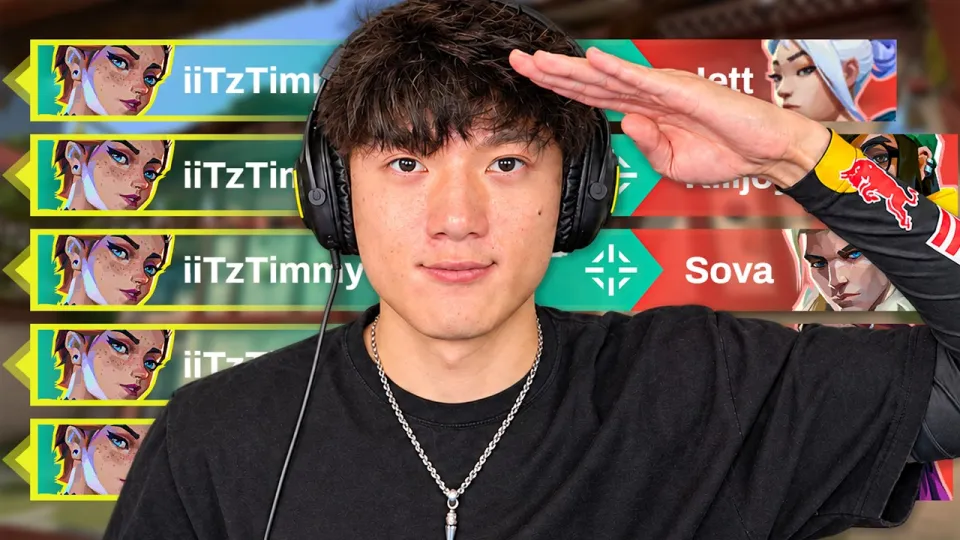
Video: I Might Be Getting TOO Good at Valorant… (Lowest To Highest Rank Challenge)
Need articles like this for your video? They help promote it on YouTube and Google — order them in the Telegram bot @sat_sit_bot. It writes articles around your video, embeds the video and publishes them on popular niche websites (no ads). Free trial — 50 articles.
· based on the channel iiTzTimmy Two
Valorant is Riot Games' free-to-play 5v5 tactical shooter, and the lowest-to-highest rank challenge is a solo climb from the bottom of ranked (Iron) toward the top (Radiant). iiTzTimmy Two takes on exactly that format in "I Might Be Getting TOO Good at Valorant… (Lowest To Highest Rank Challenge)", and you can watch the full streamed run live on his Twitch channel. The appeal is simple: one player, one account, every rank in between, with no shortcuts except raw skill and patience.
What the lowest-to-highest rank challenge actually is
The challenge is a self-imposed ranked marathon: you begin on an account placed near the bottom of the ladder and try to reach the highest tier you can before the run ends. In Valorant the ladder runs Iron, Bronze, Silver, Gold, Platinum, Diamond, Ascendant, Immortal, and Radiant, with each tier split into three divisions. Radiant is not a fixed score — it is the top 500 players per region, so reaching it means out-climbing thousands of other Immortals rather than just hitting a number.
A few rules shape how hard the format is:
- Placement matches decide the starting point, so a fresh account can land anywhere from Iron to Platinum depending on hidden MMR.
- Rank Rating (RR) gains shrink as you climb, and a loss costs more once your MMR stops matching your visible rank.
- Radiant requires both a high Immortal rating and a spot inside the regional top 500 leaderboard.
- Consistency matters more than highlight plays: a 60% win rate over hundreds of games beats a 90% win rate over ten.
The result is a format that tests aim, game sense, and — as the video shows — tilt resistance in equal measure.
Why low-elo lobbies are a mental game first
The most instructive part of the run is not the aiming; it is how quickly low-ranked matches turn into arguments. In the opening game a Cypher player spends the round complaining that teammates are not giving information, then makes questionable calls of his own and blames the team when they fail. Viewers picked up on it immediately, noting that the same player seemed to invent comms in his head and nitpick everything except his own positioning.
That pattern is the single most common reason players stay stuck in Iron through Gold. A few practical counters:
- Mute toxic voice chat early instead of arguing; pings carry most of the information you actually need.
- Treat every round as a reset — eco rounds and lost pistols are where mental collapses start.
- Focus on one repeatable job per round (entry, trade, or anchor) rather than trying to fix the whole team.
- Review your own deaths before reviewing anyone else's.
A player who keeps a level head in a lobby full of blame will climb faster than one with better aim and worse temper.
The mechanics that separate a smurf from a stuck player
The run also shows what high-level Valorant looks like when it is dropped into a low-rank match. Small habits compound: pre-aiming common angles, using utility before peeking instead of after, and knowing when to hold a site alone rather than chase a kill. One moment viewers flagged is a fake AFK bait — standing still to look disconnected, then punishing the opponent who walks past — a trick that only works because the player understands how enemies read the game.
Other recurring details from the climb:
- Crosshair placement stays at head level even while rotating, which turns ordinary swings into free kills.
- Ability usage is timed to the team's push, not spent on cooldown.
- Economy discipline: saving with the team beats forcing a rifle buy alone.
- Ultimates are tracked, including edge cases — viewers spotted a round where a kill on Clove should have refreshed an ultimate and the game did not register it, a reminder that bugs happen even at the top.
None of this is exotic. It is the same checklist any player can drill in Deathmatch and custom lobbies.
How matchmaking and opponents change as you climb
As the account moves up, the lobbies change character. In the second featured match the opponents are noticeably hungrier — viewers described them as desperate to make a name for themselves against a known streamer, and one comment noted that nobody in that lobby seemed to realize who they were playing against until it was too late. That dynamic cuts both ways: fame brings extra pressure, but it also means enemies over-extend for a highlight.
The practical lesson for anyone attempting their own climb:
- In Silver and Gold, punish over-aggression — most players peek without utility and lose to a held angle.
- In Platinum and Diamond, trade discipline decides rounds; solo plays stop working.
- In Ascendant and above, information denial and utility timing become the main currency.
- Near Immortal, queue timing and duo partners matter as much as individual form.
A climb is a sequence of different games wearing the same ruleset.
Common viewer questions about the climb
The comments on the run cluster around a few practical themes, and they apply to anyone chasing ranks.
Sensitivity and setup come up constantly — viewers ask what sensitivity and DPI a top player uses. There is no magic number: most pros land somewhere between 200 and 400 effective DPI (mouse DPI multiplied by in-game sensitivity), and the right value is the one that lets you turn 180 degrees comfortably while still tracking a strafing target.
Another recurring theme is whether a high-rank player in a low lobby is "tryharding" or just playing normally. The honest answer is that the challenge format requires winning, so the run is inherently competitive — but the visible gap comes from fundamentals, not from a secret trick.
Finally, viewers notice scoreboard oddities, like an ACS value that jumps by a single point between rounds. Those are display quirks and rounding in the stats screen, not evidence of anything deeper.
Useful links
- Watch iiTzTimmy live on Twitch
- iiTzTimmy on Twitter
- iiTzTimmy on Instagram
- iiTzTimmy on TikTok
- iiTzTimmy Discord community
What the run proves about climbing in Valorant
The lowest-to-highest rank challenge works as a demonstration because it removes every excuse except the player's own decisions. iiTzTimmy Two presents the format as entertainment, but the underlying takeaways are practical: keep your mental steady when a teammate tilts, drill crosshair placement until it is automatic, and treat each rank bracket as a different puzzle rather than a single grind. The gap between Iron and Radiant is real, but it is built from small, repeatable habits rather than raw talent alone. If you want to follow the climb as it happens, tune in live on Twitch.
Key takeaways
- The challenge: start on a fresh low-ranked account and climb as far as possible, ideally all the way to Radiant.
- iiTzTimmy Two documents the run in "I Might Be Getting TOO Good at Valorant… (Lowest To Highest Rank Challenge)".
- Ranked Valorant has nine tiers from Iron to Radiant, with Radiant reserved for the top 500 players per region.
- Low-elo lobbies punish ego peeks: a Cypher in the first match tilts over missing comms and blames the team.
- High-level mechanics like a clean flick or a fake AFK bait are what separate a climbing smurf from a stuck player.
Questions & answers
What is the lowest-to-highest rank challenge in Valorant?
It is a solo climb where a player starts on an account placed near the bottom of ranked, usually Iron or Bronze, and tries to reach the highest tier possible, ideally Radiant. The format tests aim, game sense, and consistency over hundreds of matches rather than a single session.
How long does it take to go from Iron to Radiant?
It depends heavily on win rate and hidden MMR, but most strong players need hundreds of ranked games because RR gains shrink as the account climbs. Reaching Radiant also requires a spot in the regional top 500, not just a high Immortal rating.
Why do low-ranked Valorant lobbies feel so toxic?
Players in Iron through Gold often lack a repeatable plan, so rounds turn into blame when things go wrong. Muting early, focusing on one job per round, and reviewing your own deaths are more useful than arguing about comms.
What sensitivity do high-rank Valorant players use?
Most top players sit between roughly 200 and 400 effective DPI, which is mouse DPI multiplied by in-game sensitivity. The correct value is the one that lets you clear angles and track strafing targets without overshooting.
Source: I Might Be Getting TOO Good at Valorant… (Lowest To Highest Rank Challenge) · Markdown version